
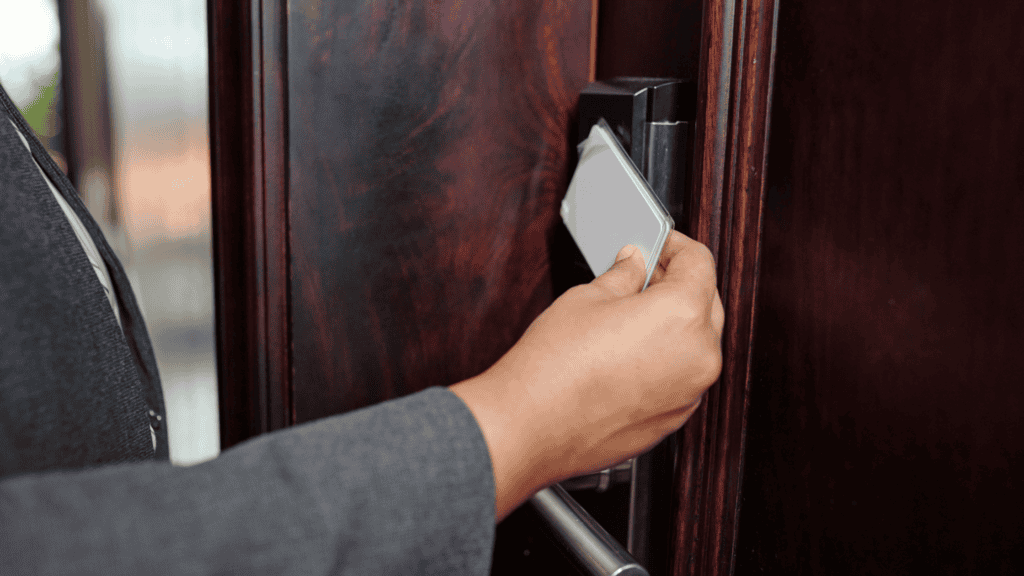
For many businesses, controlling who can enter a building is just as important as locking the door itself. Traditional keys still have their place, but many commercial properties now need a more flexible way to manage access for staff, contractors, tenants, and visitors. That is where Access Control comes in.
If you are researching access control for businesses, the main challenge is usually not whether it is useful, but which type of system makes the most sense for your building. Metro Locks already offers access control installation, repairs, and maintenance across London and Greater London, so this topic is a strong fit for both SEO and real business enquiries.
What is access control?
Access control is a way of managing entry to a building or part of a building without relying only on traditional locks and keys. Instead of giving everyone the same physical key, businesses can use fobs, cards, PIN codes, audio entry systems, or other electronic methods to allow authorised access.
This is especially useful in offices, apartment buildings, shared workspaces, commercial units, and mixed-use properties where different people may need different levels of access. Instead of changing locks every time someone leaves, businesses can often update permissions more easily through the system itself.
Why businesses move beyond traditional keys
Standard keys can work well for some smaller properties, but they often become harder to manage as a business grows. Keys can be lost, copied, or passed between people without clear records. If one goes missing, the security risk may not be obvious straight away.
Access control offers more flexibility. Businesses can limit access to certain doors, give entry only during certain hours, or remove access when staff change. In shared buildings or managed properties, this can make day-to-day security much easier to control.
That does not mean every business needs a complex setup. In some cases, a straightforward door entry system is enough. In others, especially where there are multiple users, separate areas, or higher security needs, a more structured access control solution may be the better fit.
What should a business consider first?
The best access control system depends on the property and how it is used. Before choosing a system, it helps to think about who needs access, how often the door is used, and whether the building has one main entrance or several different access points.
For example, an office with a single entrance may only need a simple controlled entry solution. A mixed residential and commercial building may need a more tailored setup, especially if different users need access to different areas. A facilities team may also need a system that is easy to manage over time rather than just install once and leave unchanged.
Metro Locks makes this point clearly on its access control page: there is no one-size-fits-all solution. That is an important message because many customers start by looking for a product, when what they really need is advice on the right setup for their property.
Repairs, servicing, or new installation?
Not every access control enquiry is about a brand-new system. In many cases, the first need is fault-finding or repair. A door entry system may stop releasing the door properly, the access reader may stop responding, or users may experience inconsistent entry problems.
For businesses, this can quickly become more than an inconvenience. A faulty access system can affect staff, tenants, deliveries, and day-to-day operations. That is why access control maintenance is as important as installation. A provider needs to understand both the electronic and mechanical sides of the system, because the issue is not always where it first appears.
Metro Locks already positions its service around access control repairs, maintenance, and new installations, which gives this blog a useful mid-funnel role. It can attract businesses that are still defining the problem as well as those actively comparing solutions.
What makes a good access control setup?
A good access control system should do three things well: improve security, make daily access easier, and suit the building without adding unnecessary complexity. The right system should be reliable, easy to use, and practical for the people managing it.
For some businesses, that may mean a simple entry solution with controlled release and user credentials. For others, it may involve a broader combination of access control and intercom functionality, especially in shared or multi-occupancy buildings.
The most important thing is that the system matches the building’s real needs. An overcomplicated setup can be as frustrating as an outdated one. That is why professional advice matters before installation begins.
Final thoughts
Access control for businesses is really about balancing security, convenience, and long-term manageability. The right system can reduce the risks that come with lost keys, make access easier to manage, and support the day-to-day operation of a building much more effectively. But the best solution will depend on the property, the users, and the level of control required.